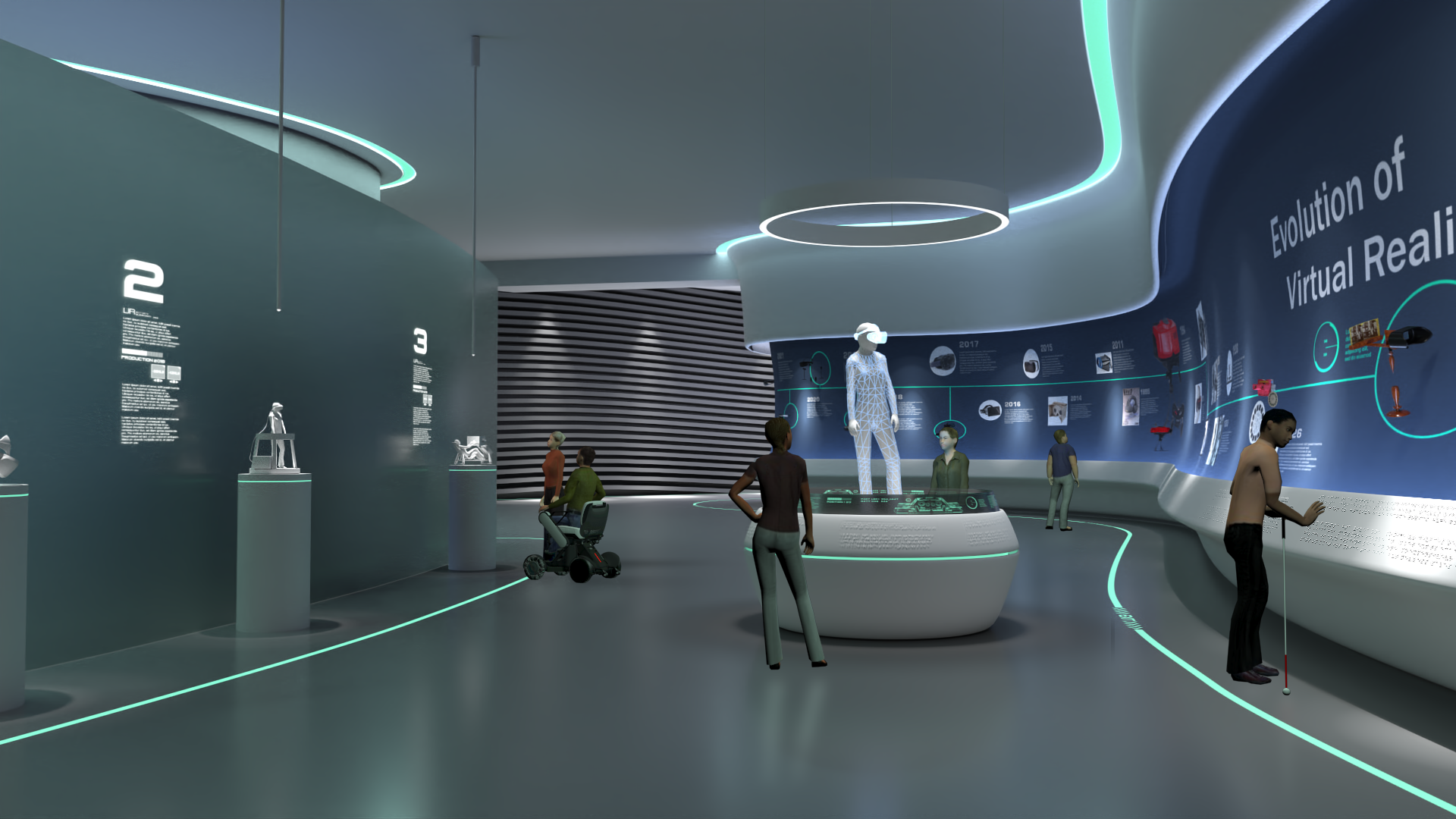
Exploratorium_8.1.1
Input
- using 2D to 6D Continuous Controls

Annotated Bibliography

Category
  • Visions of the Future
    • PAST Visions of the Future
  • Input
    • using Text
    • using Pointing Devices
    • using eyes
    • using Voice or Sign
    • using Machine Vision
    • using 1D Continuous Controls
    • using 2D to 6D Continuous Controls
    • using Gestures on a Surface (2D)
    • using Gestures in 3-space
    • Unique Combinations of Input Devices
    • Enhancing/Accelerating Input
  • Sensing (by device)
    • Biological
    • Mechanisms for Sensing
    • Environmental
    • Virtual sensors
    • Other
  • Output
    • to Visual sense
    • to Tactile or Pain sense
    • as Language (speech, text, sign-lang)
    • to Auditory sense
    • to Directly Activate/Control user
  • Altering/Enhancing Sensory Input
    • what is Seen
    • Translating Between Senses
  • Direct Brain Interfaces
    • Unique Combinations of DBI types
    • Mechanisms for Direct Brain Interfaces
    • DB Output, to Control or Project
    • DB Input - into Brain
    • Direct Brain Monitoring
  • Virtual & Augmented Reality (xR)
    • Mechanisms for AR/VR/xR
    • Uses of AR/VR/xR
  • Uses of AI
    • to Enhance Input
    • as Assistant (voice, text, etc.)
    • to Enhance/Adapt Output
    • to Enhance Sensing
    • Other uses of AI in interfaces
  • Accessibility + Digital Divide
    • Accessibility & HCI
    • Digital Divide - Digital Affinity
    • Digital Divide - Disability
  • Other
Search

COPY currently shown bibliography

Felzer, T., & Rinderknecht, S. (2011). Using a game controller for text entry to address abilities and disabilities specific to persons with neuromuscular diseases. The Proceedings of the 13th International ACM SIGACCESS Conference on Computers and Accessibility, 299–300. https://doi.org/10.1145/2049536.2049616 

  • This study explores using Microsoft object recognition and audio-description for 3D scene understanding. The researchers found that individuals with neuromuscular diseases face difficulties with traditional keyboards. They propose a modified game controller for text entry, which showed similar typing speed but reduced exhaustion in a case study. These findings suggest promising potential for the alternative approach.